
Quarter Mile Calculator
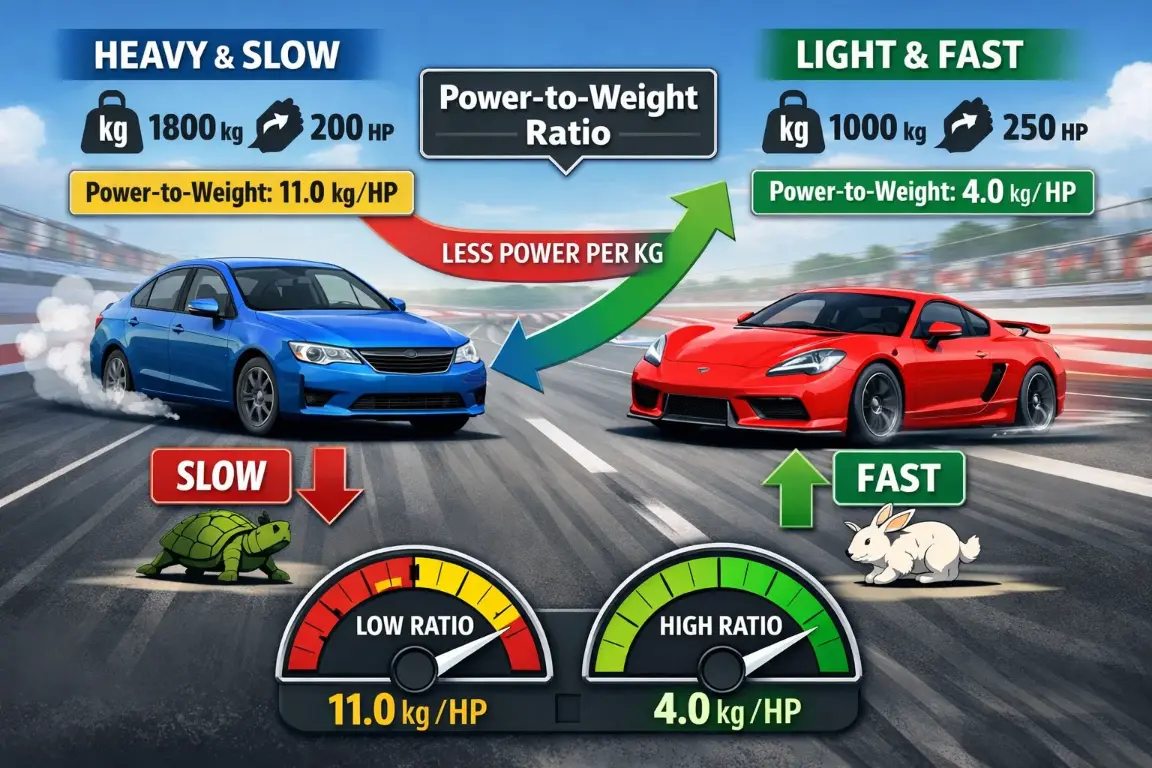
Understanding Quarter Mile Calculator
Many car and bike enthusiasts often wonder how fast a vehicle can really accelerate. Some look only at horsepower, others only at engine size, but the truth is that real performance depends on multiple factors, and one of the easiest ways to understand it is by using a Quarter Mile Calculator.
This tool is designed to give users a clear, simple estimate of how long a vehicle will take to cover a quarter mile (402 meters). Whether you are a racing fan, a car buyer, or someone curious about vehicle performance, this calculator provides useful insight without needing to go to a track.
Using this calculator, you can also link your results with a Power to Weight Ratio Calculator to see how engine power and vehicle weight together affect acceleration.
What is a Quarter Mile?
A quarter mile equals roughly 402 meters. It is a standard measurement used in drag racing and performance testing. Vehicles start from a standstill and complete the distance as fast as possible. The total time taken is called the quarter mile time or elapsed time (ET).
This simple distance test helps measure acceleration efficiency and overall performance. It’s especially useful because:
- It gives a standardized way to compare vehicles
- It highlights real-world acceleration differences
- It helps beginners understand performance beyond engine specs
By using the quarter mile time calculator, users can instantly estimate acceleration times for any vehicle, stock or modified.
How a Quarter Mile Calculator Works
The calculator estimates performance based on input values such as:
- Engine power (HP or kW)
- Vehicle weight (kg or lbs)
- Optional adjustments like traction or modifications
Once these values are entered, the calculator provides an estimated quarter mile time, giving a realistic sense of how the vehicle performs from 0–402 meters. Many users also use an HP quarter mile calculator or a quarter mile horsepower calculator to understand how much engine power is needed to reach a target ET. This is especially useful for modified vehicles or tuning projects.
Quarter Mile Performance Ranges
To give users a better idea, here’s a quick reference table showing typical quarter mile times based on vehicle type and performance:
| Vehicle Type | Typical Quarter Mile Time | Notes |
| Economy Car | 16–18 seconds | Standard family cars |
| Compact Sports Car | 14–16 seconds | Lightweight, moderate HP |
| Performance Sedan | 12–14 seconds | Balanced HP and weight |
| Sports Car | 10–12 seconds | High HP, low weight |
| Racing Car / Drag Car | 8–10 seconds | Extreme acceleration potential |
| Racing Car / Drag Car | Under 8 seconds | Track-focused, very high power |
This table helps beginners quickly see where their vehicle might fall and how quarter mile time changes with weight and power.
Benefits of Using an Online Quarter Mile Calculator
Manual calculations are possible but online tools provide:
- Instant results without complex math
- Clear understanding of performance differences
- Safe testing of hypothetical upgrades
- Educational insights for beginners and experts
- Ability to compare multiple vehicles quickly
By using this calculator alongside a power to weight ratio calculator, users can see not only how fast a vehicle goes but also why it performs that way.
Why Quarter Mile Time Matters
Quarter mile testing is more than a racing trend. It provides practical insights about vehicle acceleration:
- Real Acceleration Measurement – Unlike top speed, quarter mile shows how quickly a car reaches high speed from a stop.
- Comparing Vehicles Fairly – It allows apples-to-apples comparison between different cars and motorcycles.
- Estimating Performance of Modifications – Engine upgrades, weight reduction, or tire changes can be evaluated before real testing.
- Learning Tool for Enthusiasts – It helps beginners understand acceleration science in a practical, hands-on way.
By combining results from a quarter mile calculator and a power to weight ratio calculator, users can make informed decisions about upgrades, performance expectations, and comparisons.
Real Example
Let’s consider two vehicles:
- Engine: 350 HP
- Weight: 1800 kg
- Engine: 220 HP
- Weight: 1100 kg
Even though Car A has more horsepower, Car B may complete the quarter mile faster because of lower weight. Using a quarter mile calculator helps users see this difference instantly. Linking results with a power to weight ratio calculator gives a deeper understanding of why Car B accelerates faster despite lower HP.
Factors That Affect Quarter Mile Performance
The calculator gives estimates based on a few core inputs, but real-world performance depends on additional factors:
- Engine power output
- Vehicle weight and distribution
- Tire grip and traction
- Transmission efficiency and gear ratios
- Aerodynamics and drag resistance
- Driver technique and launch control
Understanding these factors helps users interpret calculator results more accurately and apply them practically.
Who Can Benefit From a Quarter Mile Calculator?
Car Buyers
Before purchasing, users can estimate real-world acceleration performance and make comparisons between models.
Racing Enthusiasts
Drag racers and hobbyists can predict quarter mile times and plan upgrades or strategies accordingly.
Students & Learners
Automotive students can learn about vehicle dynamics, acceleration physics, and the impact of weight and power on performance.
Modification Lovers
People upgrading engines, reducing weight, or improving tires can calculate expected ETs before investing in modifications.
Final Thoughts
Understanding vehicle acceleration is no longer confusing with a quarter mile calculator. It provides realistic estimates and helps users see how power and weight interact to influence performance. By combining it with a power to weight ratio calculator, users gain a complete picture of acceleration and efficiency.
Whether you are comparing vehicles, planning modifications, or simply curious about performance, this tool gives practical, useful insights in a simple and educational way. Real performance knowledge empowers users to make smarter decisions rather than relying on just engine numbers or marketing claims.